
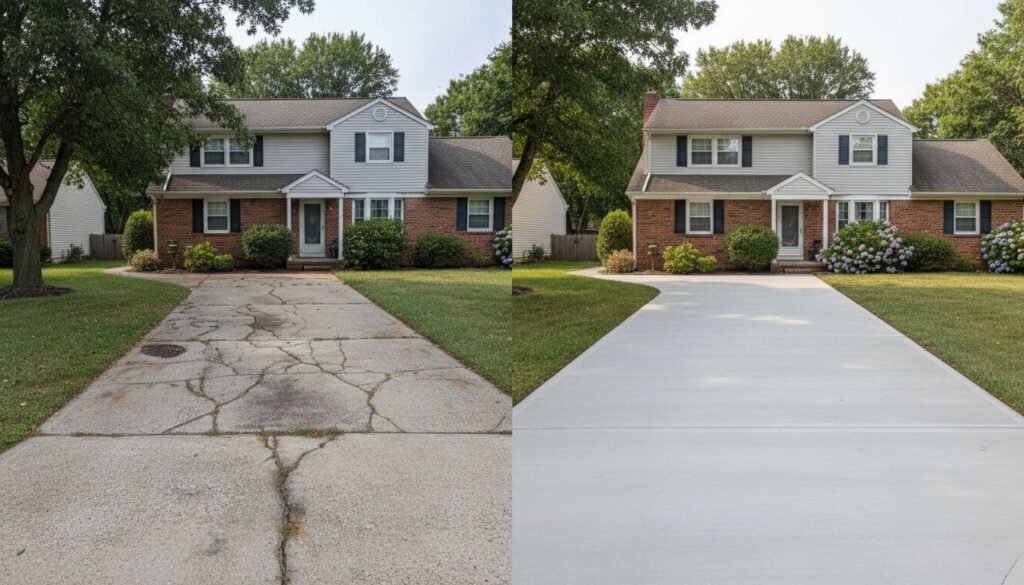
You can only patch the same crack so many times before it starts to feel pointless. Many Trenton driveways have been through decades of winters, salt, and heavy cars. At some point, the surface isn’t just ugly; it’s worn out.
That is when homeowners start to ask a hard question. Should I repair again, or is it time for concrete driveway replacement? The right answer depends on what is going on under the surface, not just what you see on top.
This guide breaks down how to tell the difference, what replacement really involves, and how to think about cost, safety, and long-term value for your home.
How Trenton Weather Wears Out Concrete Driveways
Concrete does well in New Jersey, but it still takes a beating. In Trenton, freeze-thaw cycles are one of the biggest enemies of a driveway.
Water works into small cracks and pores. When it freezes, it expands and pushes the concrete apart. Over many winters, those tiny cracks spread and deepen. Add road salt from your tires, and the surface starts to flake and pit.
Other local stress factors include:
- Heavy SUVs and work trucks on narrow city driveways
- Poor drainage in older neighborhoods like Chambersburg and Wilbur
- Soil that shifts and settles after wet seasons
One or two small cracks are normal. A network of cracks, uneven slabs, and standing water shows that the structure of the driveway is breaking down.
Signs Your Driveway Has Passed The Repair Stage
Some driveway problems are just cosmetic. Others point to deeper trouble in the base and subgrade. Here is what to watch for.
Widespread cracking and “alligator” patterns
Hairline cracks that run straight and narrow can often be sealed or filled. When the surface looks like a web or the back of an alligator, the top layer has lost strength.
That pattern means the concrete has been stressed over a wide area. Patching each crack will not bring back the lost strength. New cracks usually show up nearby within a season or two.
Heaving, sinking, and trip hazards
If one section of your driveway has lifted or dropped, the problem is under the slab. Common causes include:
- Poor or thin base material
- Washout from gutter and downspout discharge
- Tree roots pushing from below
You may see a lip between panels, or a corner that rocks when you drive over it. Grinding or mudjacking might help in mild cases, but if several areas are moving, a full concrete driveway replacement is often the safer choice.
Potholes, deep spalling, and loose stone
Potholes in concrete do not fix well with simple patch material. The edges keep breaking, and the patch tends to lift or pop out.
Deep spalling, where you see coarse stone showing and the surface has worn away, is another red flag. That usually means the concrete paste at the top has weakened from salt, age, or bad mix, and more of it will flake with each winter.
Repairs that never seem to last
If you’ve already:
- Filled cracks more than once
- Tried store-bought patch kits
- Had a contractor patch or resurface
And, if the driveway still looks rough within a year or two, the slab may be near the end of its life. At that point, more repair money often just delays the real fix.
Repair vs Replacement: How To Make an Honest Call
The main question is simple. Is the damage on the surface only, or is the slab and base failing?
Repairs can make sense when:
- Cracks are limited and not very wide
- The slab is still level, with no major bumps
- You do not see signs of major base movement
In those cases, crack sealing, joint repair, or a thin overlay might add several more years.
Replacement makes more sense when:
- The driveway is 25 to 30 years old or more
- Many slabs are cracked through, not just at the surface
- You see sunken or raised panels, or chronic pooling water
- You keep fixing the same areas without long-term success
Think of it like a roof. At some point, more patches cost you more in the long run than a full tear-off and new system.
If you are not sure, a concrete contractor can saw-cut a small section, check the base thickness, and look at the depth and type of cracking. That kind of inspection gives a clearer answer than just looking from the curb.
What Happens During Concrete Driveway Replacement
Knowing the steps helps you understand what you are paying for and what quality looks like.
1. Site visit, measurement, and planning
The contractor checks:
- Driveway size, layout, and thickness
- Drainage patterns and low spots
- Access for removal and concrete trucks
- Nearby features like steps, walks, and garage floors
They also discuss any upgrades you might want, such as thicker concrete at the apron, rebar or wire mesh, or a broom versus stamped finish.
2. Permits and local code checks
Trenton and nearby towns often require permits for full concrete driveway replacement, especially if you are tying into a city sidewalk or apron.
Rules for thickness, reinforcement, and inspection can change over time. Always confirm current requirements with the City of Trenton or your contractor before work starts.
3. Removal of the old driveway
The crew breaks and removes the old slab using saws, skid steers, or jackhammers. Good contractors haul the debris to a proper disposal or recycling site rather than burying it on your property.
Once the old concrete is gone, the real condition of the base and subgrade becomes clear.
4. Base repair and compaction
A strong driveway starts with a stable base. In many older Trenton homes, the base is thin or mixed with soft soil.
The crew may:
- Excavate soft spots
- Add a new stone base
- Compact in layers with a plate tamper or roller
Proper base prep is one of the biggest differences between a driveway that lasts 10 years and one that lasts 30.
5. Forms, reinforcement, and pour
Wood or metal forms set the lines and thickness. In many cases, a 4-inch slab is standard for cars, and 5 inches makes sense for heavy use or trucks.
Reinforcement can include:
- Wire mesh for general crack control
- Rebar in driveways that see heavier loads or poor soil
The crew then pours, spreads, and finishes the concrete. A broom finish is common because it gives traction in rain and snow.
6. Curing and first use
Concrete gains strength over time as it cures. Light foot traffic is usually fine after a day or two. Cars should stay off for at least a week, sometimes longer if the slab is thick or the weather is cool and damp.
Good curing practices, such as keeping the surface moist or using curing compounds, greatly improve long-term strength and resistance to cracking.
Key Cost Factors Without Exact Numbers
Driveway prices vary a lot from house to house. Instead of chasing a number online, it helps to know what drives the total.
Big cost factors include:
- Size and shape: Long or wide driveways use more concrete and base stone. Curved layouts take more forming time.
- Slab thickness: Thicker sections cost more up front but handle loads better.
- Condition of the base: If your existing base is weak or thin, more digging and new stone are needed.
- Site access: Tight city lots or back alleys can add labor if trucks cannot get close.
- Decorative finishes: Stamped patterns, borders, or color add material and skilled labor costs.
- Drainage fixes: Adding drains, regrading, or tying downspouts into piping adds work but can stop future damage.
When you compare quotes, make sure you are comparing the same thickness, base depth, and reinforcement, not just the bottom line.
How a New Driveway Improves Safety and Value
A worn driveway is more than an eyesore. It can be a real safety problem.
New concrete reduces:
- Trip hazards at cracks and lips
- Loose stone and crumbling edges
- Deep puddles that freeze into ice sheets
It also improves curb appeal right away. Fresh, clean concrete makes the whole front of the house look sharper, even if nothing else changes.
In many Trenton neighborhoods, buyers look closely at driveways and walkways. A solid, well-built driveway sends a clear message that the home has been cared for.
Getting Ready To Talk With a Concrete Contractor
Before you call a contractor, it helps to gather a few things.
Take clear photos of:
- The worst cracks and low spots
- Areas where water sits after rain
- Any steps, walks, or garage floors that tie into the driveway
Write down how you use the driveway. Do you park work trucks or only cars? Do you want space for an extra vehicle or a small turnaround?
Good questions to ask include:
- What thickness and base depth do you recommend, and why?
- How will you handle drainage and gutters?
- What reinforcement will you use?
- How do you handle permits and inspections in Trenton?
Direct answers to these questions help you see who is focused on long-term performance, not just a quick pour.
Conclusion: Knowing When To Start Fresh
At some point, patching a tired driveway feels like taping a worn-out shoe. You might get one more season, but you know it will not last. Honest inspection of cracks, movement, base condition, and age will tell you when concrete driveway replacement is the smarter move.
A well-built new driveway improves safety, protects your home from water issues, and lifts the look of your property. If you’re unsure about the condition of your driveway, a straight, on-site review from a concrete professional in Trenton is the best next step.